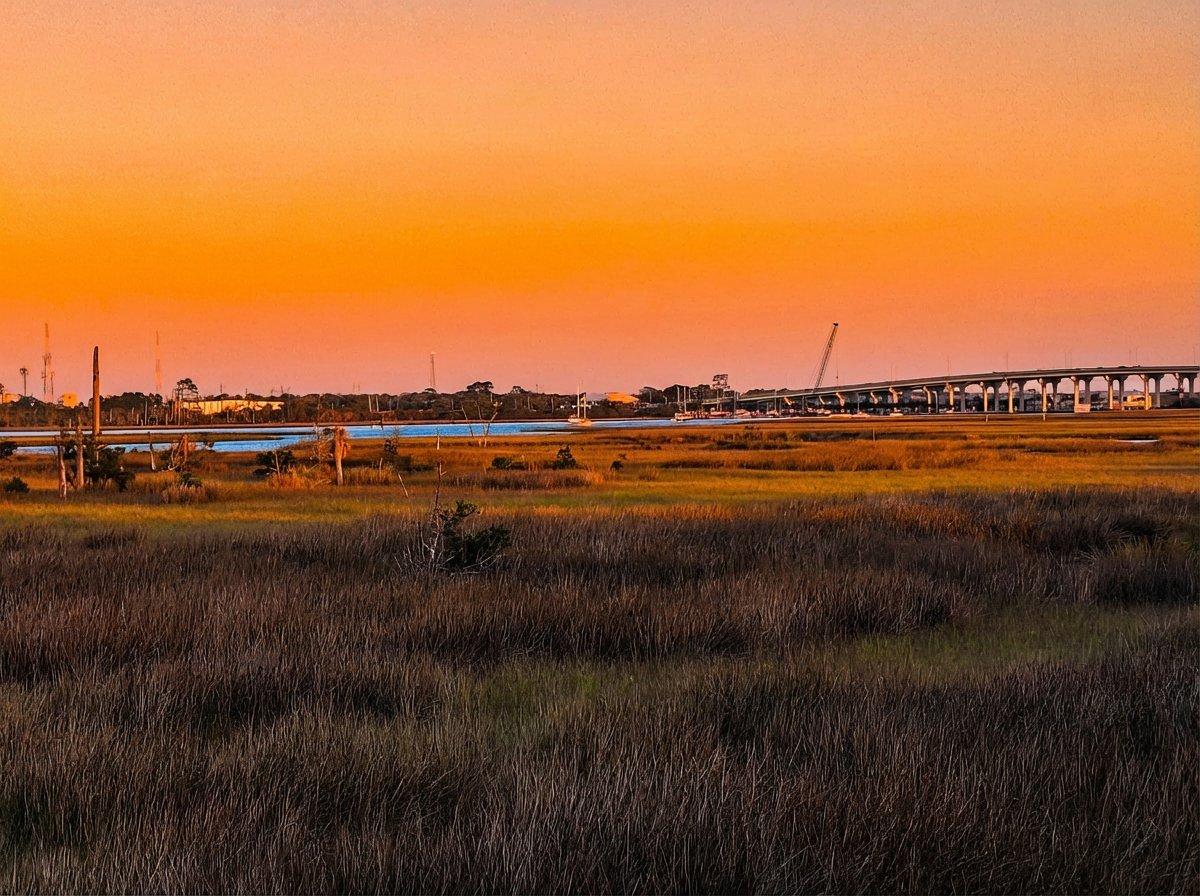
"The preserve works its quiet on you gradually. You park next to a neighborhood, walk a short path past a nature center, and within two minutes the city has stopped existing. The boardwalk over the marsh, the gopher tortoises moving through the flatwoods, the view of the Intracoastal from the observation deck at the end of the trail — this is the best free hour you can spend within fifteen minutes of Jacksonville Beach."
Castaway Island Preserve is a free 311-acre nature preserve managed by the City of Jacksonville, located at 2921 San Pablo Road S in Jacksonville, Florida. Situated along the west bank of the Intracoastal Waterway — historically known as the San Pablo River — the preserve protects a salt marsh estuary with pine flatwood islands, wetland forests, and upland hardwood hammock. A 1-mile interpretive boardwalk trail winds through the marsh to two observation decks overlooking the waterway. The preserve also has a kayak and canoe launch, a 3,000 square-foot theater-style education center, picnic tables with grills, and a hummingbird and butterfly garden. It received the American Society of Landscape Architects Award of Honor in 2004. Open sunrise to sunset, every day, at no cost.
The Preserve That Forgets the City Is There
San Pablo Road runs through one of Jacksonville's eastern residential corridors — subdivisions, traffic lights, the ordinary infrastructure of suburban life. The entrance to Castaway Island Preserve sits half a mile off Beach Boulevard, flanked by the kind of neighborhood that makes a visitor wonder, briefly, whether they have taken a wrong turn. Then the road bends, the canopy closes overhead, and the neighborhood disappears.
This is what the preserve does. It is 311 acres contained within a peninsula off San Pablo Road — surrounded on three sides by tidal estuary and on the remaining side by the city, which might as well be a different continent once you are past the nature center. We have walked this trail in January fog and October sun and on a Tuesday afternoon in November when we were the only people there. It is consistently one of the most peaceful free outdoor experiences within range of Jacksonville Beach.
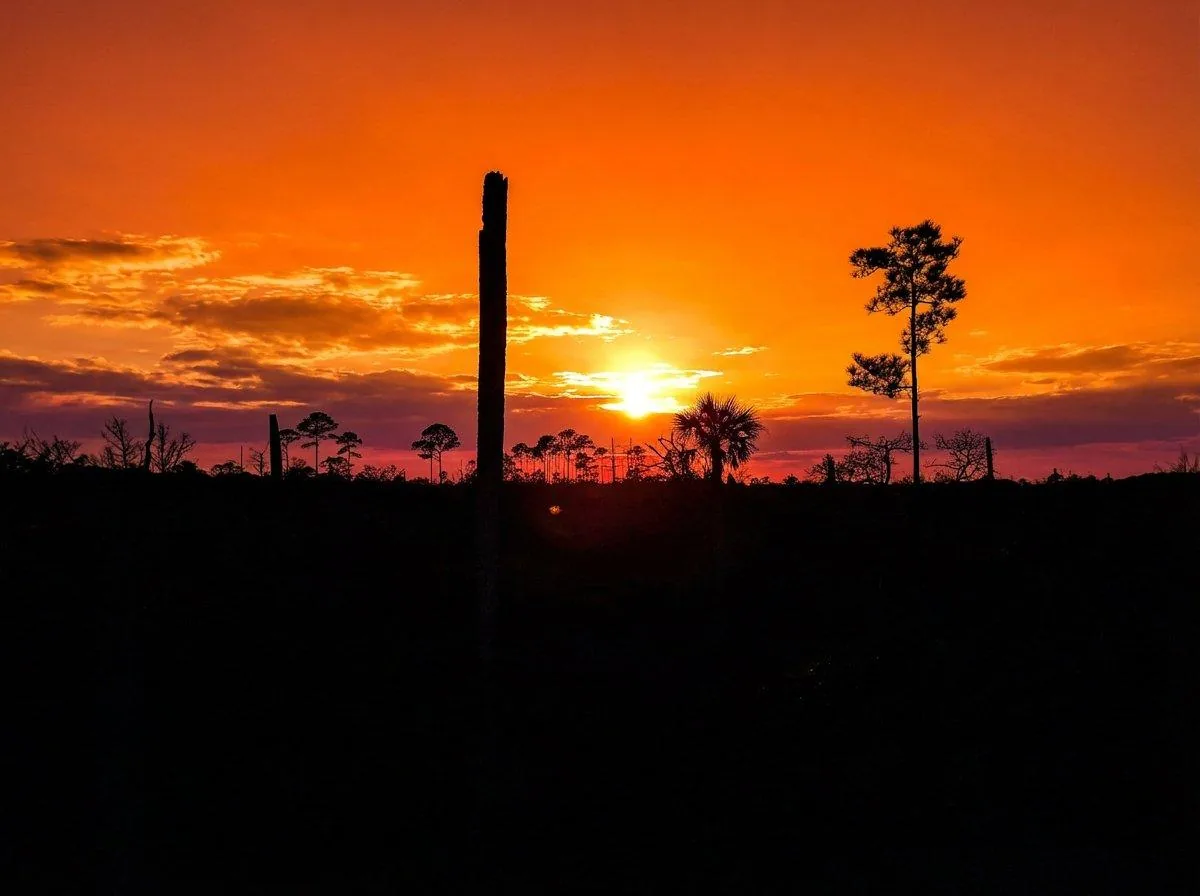
Sunset from the preserve overlook. The silhouette of the dead snag against the orange sky is one of the preserve's recurring images — it appears in more photographs of this place than any other feature.
The Trail: What You Walk, What You See
The Island Trail is a 1-mile out-and-back boardwalk walk with three feet of elevation gain. That description makes it sound modest, and in terms of physical effort it is. In terms of what it shows you, it earns more respect than a simple number suggests.
From the nature center, a paved path leads toward the Island Trail sign. Look for the animal track footprints painted on the pavement — the interpretive trail uses these as a scavenger hunt, with 12 numbered stations that identify the tracks and the animals that made them. Children follow them with genuine focus. Adults do too, once they realize the tracks are genuinely hard to identify without reading the markers.
A small bridge crosses a tidal creek dense with salt hay — the moment the boardwalk begins in earnest, and the moment the city becomes inaudible. The boardwalk rises above the estuary, passing over tidal creeks and salt marsh, with two observation decks set above the water. The first overlook faces north over an expanse of mangrove and cedar islands. The second reaches the Intracoastal Waterway itself, where you can see the far shore and the full sweep of the San Pablo River basin. Boats pass. Ospreys work overhead. The light in the late afternoon turns the marsh grass the color of old brass.
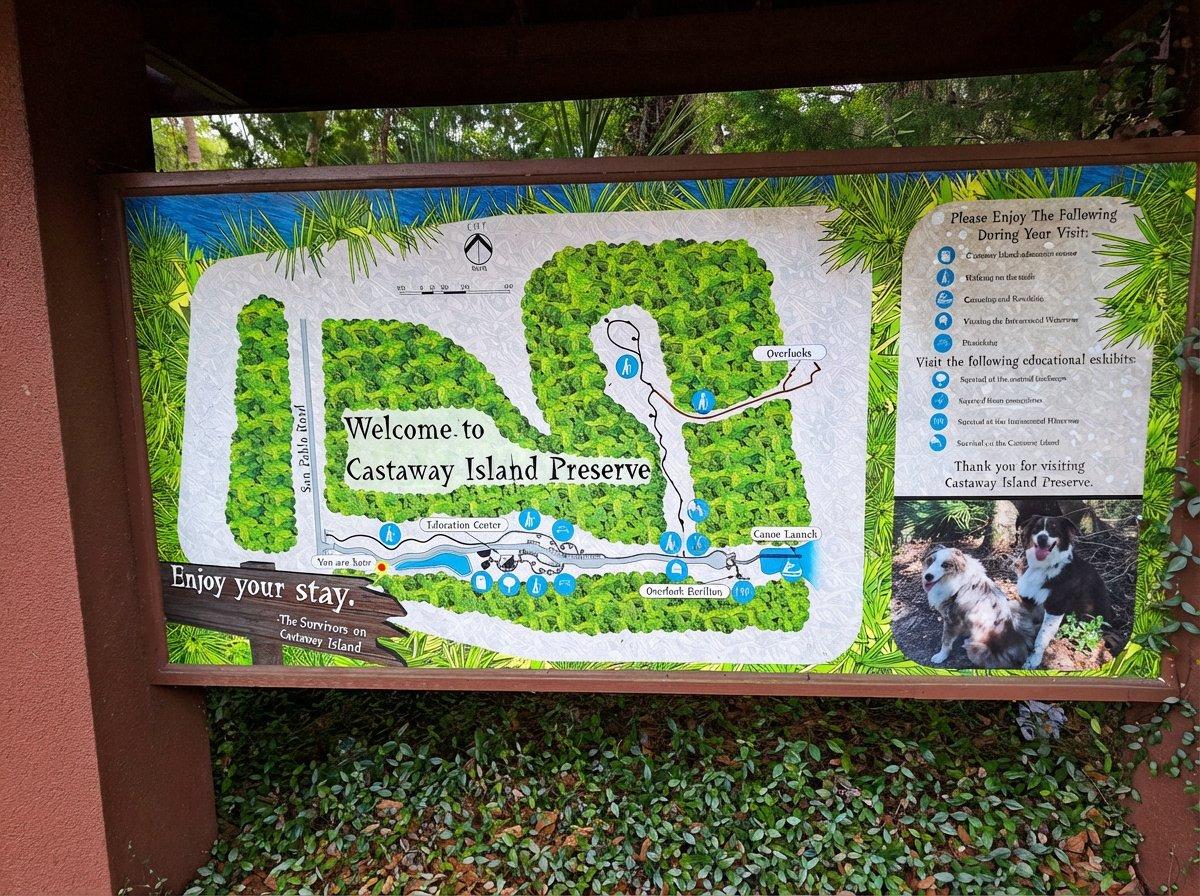
The entry map kiosk — worth studying before you start. The Island Trail is at the end of the park road; the nature center and kayak launch are marked along the way.
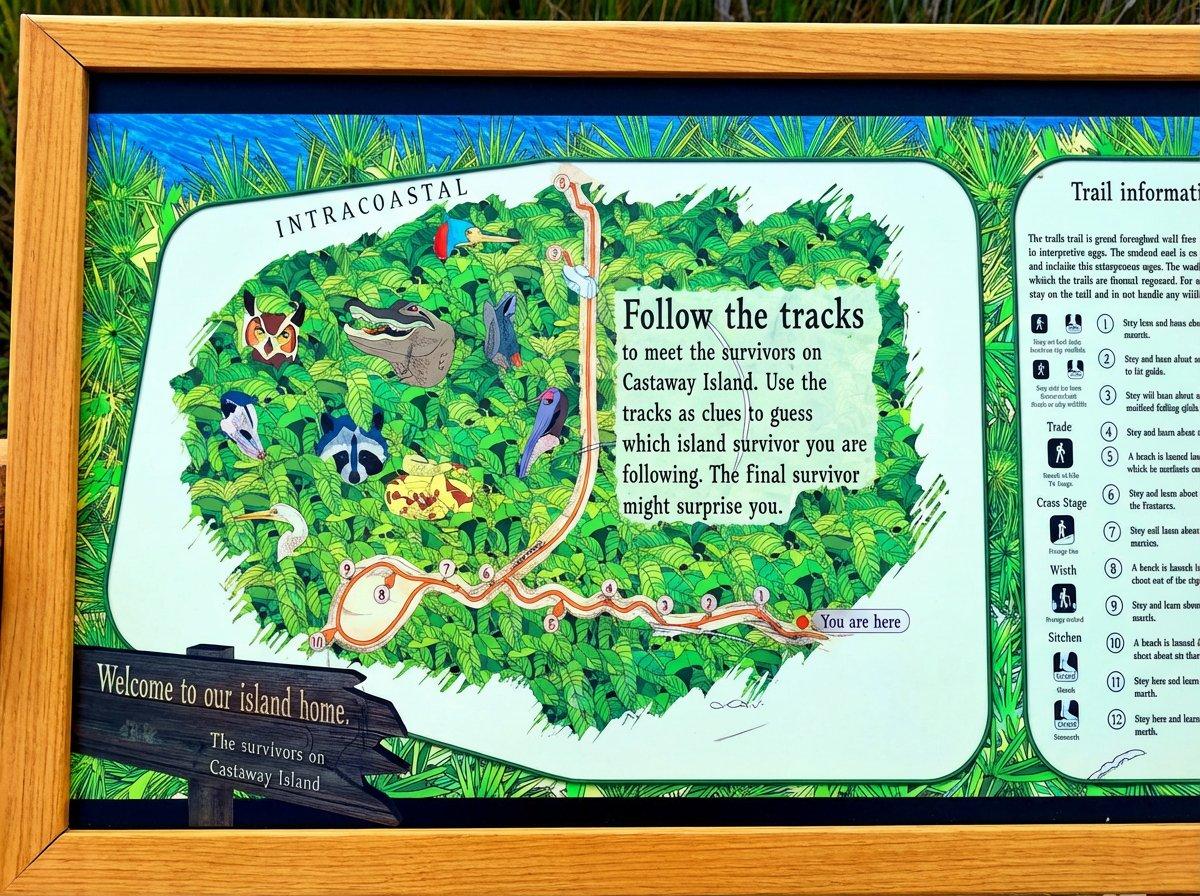
The interpretive trail map at the trailhead. Twelve stations follow animal tracks through the marsh — a designed scavenger hunt that works for all ages.
The Education Center and the Butterfly Garden
The 3,000 square-foot theater-style education center near the entrance contains exhibits on the salt marsh ecosystem — how it functions, what lives in it, why it matters as a water filtration and storm buffer system. It is open during scheduled programs. Even when closed, the signage along the paved trail does real educational work: species plaques, habitat explanations, and the interpretive footprint stations that connect the abstract idea of "wildlife" to the specific animals that actually walk this ground.
Adjacent to the nature center area is a hummingbird and butterfly garden — a planted habitat designed to attract pollinators. Painted buntings have been documented here, which makes the garden worth a slow look even for visitors who do not think of themselves as birders. A male painted bunting is one of the more vivid things a person can see in northeast Florida without driving far.
Kayaking and Paddling the Estuary
At the end of the park road, a launch provides access to the San Pablo River estuary and the Intracoastal Waterway beyond. Canoes, kayaks, and paddleboards can be launched here. Rental paddleboards are available on-site. The estuary paddling is calm, sheltered inshore water — appropriate for beginners and rewarding for more experienced paddlers who want to work the marsh edges and creek mouths at low tide. The boardwalk view of this waterway from above is good. The view from the water looking back at the preserve is better.
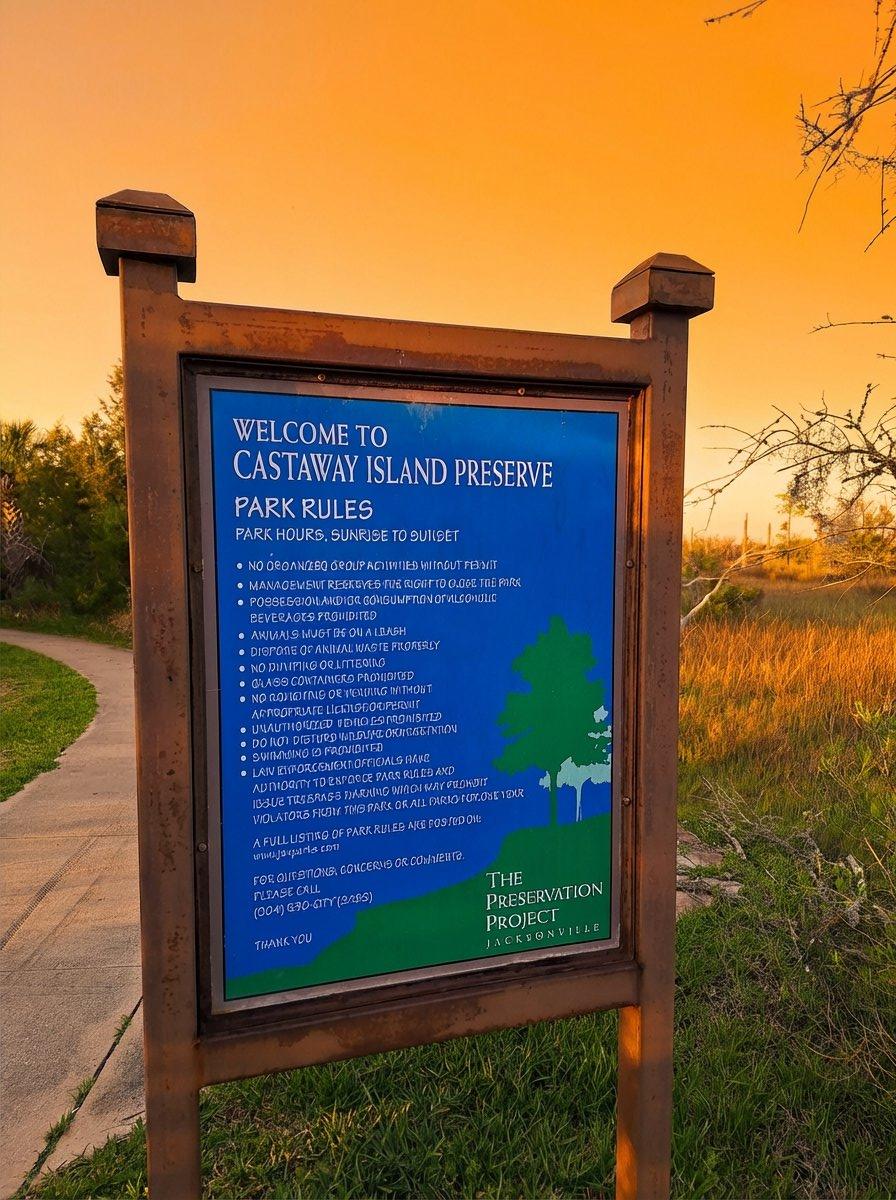
The park rules sign at the entrance. Hours are sunrise to sunset. No organized group activities without a permit. Dogs allowed on leash in paved areas — not on the Island Trail boardwalk.
Wildlife: What Lives Here
Insider Tips
- The preserve is best October through April. Temperatures are mild, biting insects are minimal, and migratory birds are passing through. It is not impassable in summer, but arrive prepared for yellow flies and mosquitoes.
- Look for gopher tortoises along the paved path near the nature center before you reach the boardwalk. They are most active in morning and early afternoon on warm days. They are wild animals — observe from a respectful distance and do not feed them.
- Follow the animal track footprints. The 12-station interpretive trail is designed as a children's activity, but the track identification is genuinely interesting for adults too. The answer to each station is posted at the next one, which keeps you walking forward.
- The second observation deck — the one at the far end of the boardwalk over the Intracoastal — is the better of the two. The view is wider, the light in late afternoon is exceptional, and the boat traffic on the waterway adds movement that the first overlook lacks.
- Dogs are welcome on the paved areas and entry path but are not allowed on the Island Trail boardwalk. If you are bringing a dog, they will enjoy the park road area and the nature center grounds but cannot join you for the main trail.
- The entrance is easy to miss. From San Pablo Road heading north, look for the park sign on the right after approximately half a mile from Beach Boulevard. There is no prominent road marker before the turn.
- The nature center is only open during scheduled programs — do not plan a visit around it being open. The outdoor elements of the preserve are available sunrise to sunset regardless.
Frequently Asked Questions
Plan Your Visit
Jacksonville, FL 32224
Every day
No fees of any kind
30–60 min · Easy
City of Jacksonville Parks