First Coast
Explorer
Florida's First Coast
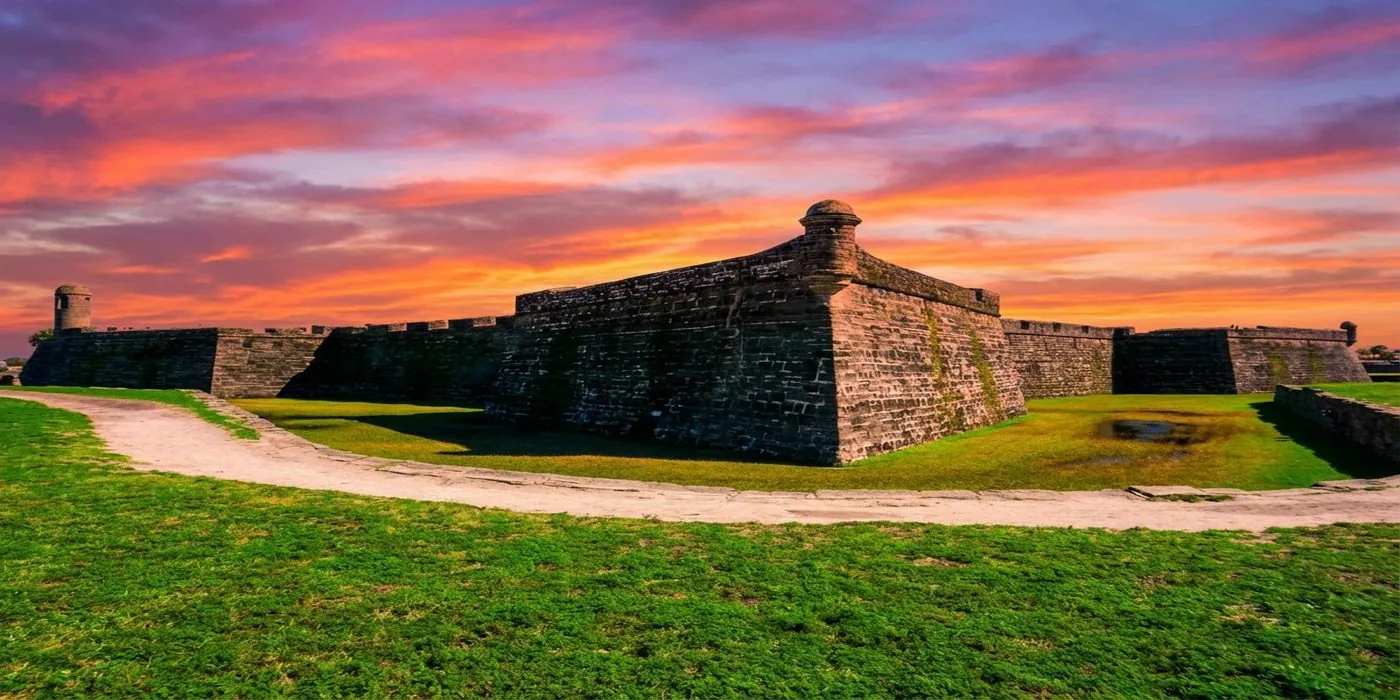
Built in 1672. Never taken by force. The oldest masonry fortification in the continental United States still stands on St. Augustine's bayfront, exactly where the Spanish left it.
The Spanish began building the Castillo de San Marcos in 1672. They finished it in 1695. Twenty-three years of construction on a coquina shell-limestone fort on the bayfront of what was already the oldest European settlement in what would become the United States. It has been standing ever since. Nobody has ever taken it by force. That fact — simple, stark, and without elaboration — is the whole story. It is enough.
In 1702, British forces under General Moore burned the city of St. Augustine to the ground. They could not burn the Castillo. They besieged it for 52 days. The walls absorbed their cannonballs rather than shattering — coquina compresses instead of fracturing — and eventually Moore withdrew. The Spanish rebuilt the city. The fort stood unchanged.
It changed hands twice after that, both times through treaties rather than battle. The British held it during the American Revolution. The Americans took it when Florida was ceded in 1821. Confederate and Union soldiers both used it during the Civil War. In 1924 it became a national monument. The walls are the same walls that stopped Moore's cannons in 1702.
"The Castillo de San Marcos was built in 1672 from coquina shell-stone. It was attacked. It did not fall. That is the whole story and it is enough."
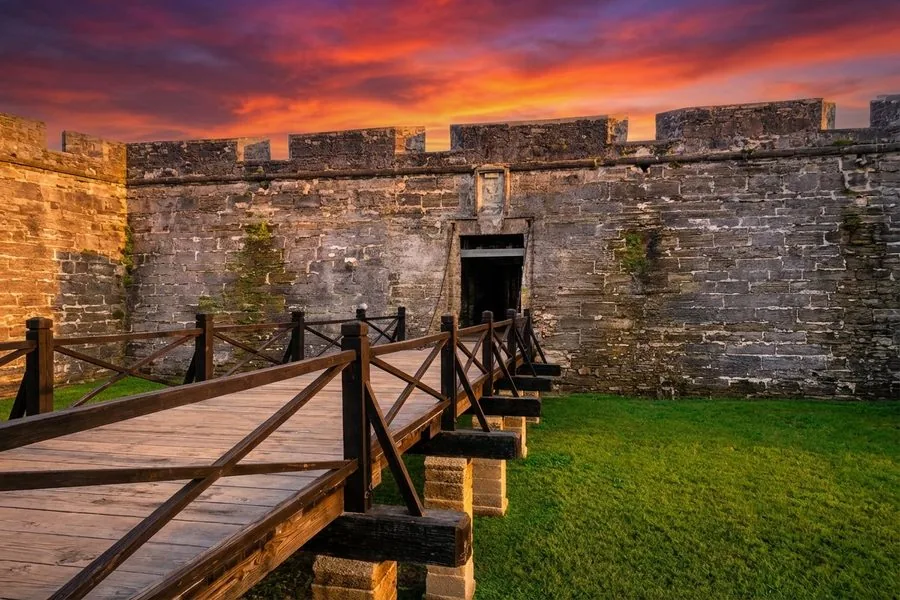
The fort is a square bastion design with four diamond-shaped corner towers called bastions. You enter through the main gate over a wooden drawbridge — the same approach soldiers and visitors have used for three centuries. Inside is a central courtyard surrounded by casemates: thick-walled rooms that once held powder magazines, a chapel, a prison, and garrison quarters. NPS rangers lead talks in these rooms throughout the day. One ranger-led casemate talk can cover more ground than an hour of self-guided reading.
The cannon and weapons demonstrations on the upper gun deck are the highlight most visitors mention. Standing on the ramparts with the Matanzas River below and the Bridge of Lions in the distance while a period-accurate cannon fires — it is the kind of experience that makes the history concrete in a way that plaques and exhibits cannot. Check the NPS website for current demonstration times before you go. They vary by season and are worth timing your visit around.
The views from the upper deck are genuinely excellent. St. Augustine's historic downtown is visible to the south. The Matanzas River spreads west. On a clear day you can see across to Anastasia Island. The fort was built to see and be seen, and from the ramparts you understand immediately why this location controlled the coast.
Parking is the one legitimate friction point. The adjacent lot is small and fills fast, particularly on weekends and in peak season. Either arrive before 9 AM when the fort opens, or come via the St. Augustine trolley from downtown. The Historic Downtown Parking Facility is also about a 10-minute walk if you don't mind the distance. Budget for parking separately from admission.
There is no air conditioning inside the casemates. In summer, this matters. The thick coquina walls keep the interior cooler than outside, but not cool. Bring water. The fort sells bottles in the courtyard for a reasonable $2.28 — less than you'll pay on St. George Street — but you'll want to have water before you enter if you're visiting June through September.
NPS Pass holders enter free and can use a separate entry line when it's busy. Active military and veterans receive discounted admission. The ticket is valid for seven consecutive days, which means if you're spending time in St. Augustine, you can visit more than once on the same purchase.
Non-negotiable. If you are in St. Augustine for any length of time, the Castillo de San Marcos is not optional. It is the reason the city exists where it does. The coquina walls that stopped British cannons in 1702 are the same walls you put your hand on today. At $15 for adults, with children free and NPS pass holders free, it is one of the best value historical experiences in the American South.
Time your visit around a cannon demonstration. Do one ranger-led casemate talk even if you think you know the history. Walk the upper deck twice — once to see the layout, once to look at the river. Then go find lunch on St. George Street, which is a five-minute walk north.